
Ep. 36 | Why Your Family Rhythms Aren’t Working (And How to Rework Your Week)
Have you ever looked at your calendar and wondered how your week became so full? You may have good routines, meaningful commitments, and a genuine desire to build a peaceful home. Yet somehow, the things that matter most keep getting pushed to the edges.
Sometimes, the problem isn’t that your family rhythms are bad. It’s that they no longer fit the season you’re in.
As our family has grown and changed, we’ve had to learn this lesson ourselves. With seven children, changing school schedules, activities, and the demands of work and home, the rhythms that once served us well don’t always work the same way today.
And that’s okay. Family rhythms are meant to serve your family, not become another thing your family has to serve.
Start With What Matters Most
Before you rearrange your calendar, take a step back and ask yourself a simple question: Are we making space for the things we care about, or are our days simply filling up?
It’s easy to build a schedule around what feels urgent. School drop-offs, meals, laundry, work, and activities all need attention. But if we aren’t careful, these demands can crowd out the very things we want our family life to be built around.
Start by identifying your family’s core rhythms. These are the things you want to make room for, even when life gets busy. They might include time with God, family meals, Sabbath rest, connection with your spouse, or time together without distractions.
Next, make a list of rhythms you would enjoy having but that aren’t essential right now. Finally, create a separate list for new ideas you may want to try someday.
This simple exercise helps you see the difference between what your family needs, what you would like, and what can wait. You don’t have to make every good idea happen in the same season.
Build Your Week Around Your Real Life
Once you know what matters most, look at your actual calendar.
One practical way to do this is with sticky notes. Write each core rhythm on its own note, then place the notes across a blank weekly schedule. Start with the commitments that cannot easily move, like work hours, school, and regular activities. Then look for places where your family rhythms can fit naturally.
You may discover that some routines need to move to a different day. Others might work better when paired with something you already do.
For example, we’ve been rethinking our Sabbath rhythm. Our Friday evenings and Saturdays had become filled with household tasks and preparation. By the time we reached our intended day of rest, we often felt exhausted instead of refreshed.
We began considering whether moving our Sabbath to Saturday evening through Sunday would better serve our family. The goal wasn’t to give up Sabbath rest. It was to create a rhythm that would help us actually practice it.
Sometimes, a small change in your weekly family schedule can make room for something that matters far more than the schedule itself.
Don’t Be Afraid to Share the Load
Household responsibilities are another place where family rhythms may need to change.
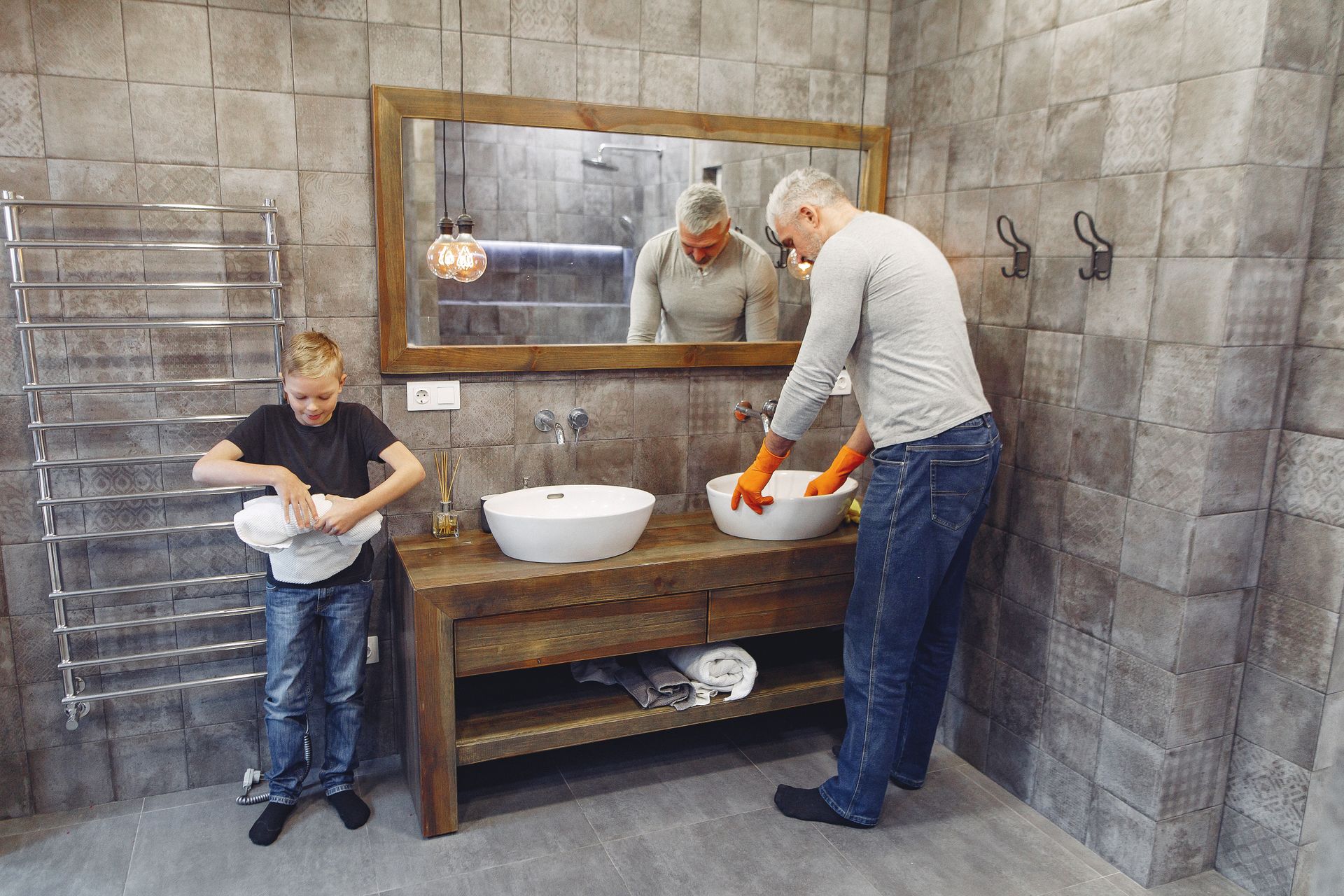
Laundry is a good example. It’s tempting to think of laundry as one task, but it’s really several: washing, folding, and putting away. Each step takes time, and together they can become a constant source of frustration.
Breaking a task into smaller parts can help you see what needs to happen and what someone else could take on. It may mean allowing your spouse or children to help in ways that aren’t exactly how you would do things yourself.
That can be hard, especially when you have a system that works for you. But a family rhythm shouldn’t depend on one person carrying every responsibility.
The goal isn’t to do everything perfectly. It’s to build a home where everyone can contribute and where the work of daily life leaves room for relationships.
Leave Room for the Unexpected
Even a thoughtful weekly plan needs margin.
We’ve experienced seasons when our family’s plans changed in ways we never could have predicted. When Darla was hospitalized, our family rhythms became more important, not less. During that difficult season, Christian and I spent months physically apart as we navigated her medical needs and cared for the rest of our family.
Our routines couldn’t make that season easy. But having some structure gave us a framework to return to when we could.
This is why we believe in planning for a sustainable week, not a perfect one. If your calendar is filled from morning to night, there’s little room for illness, unexpected needs, or simply being present with the people around you.
Try planning your week with the expectation that not everything will go according to plan. Choose a few rhythms that matter most, and resist the urge to fill every open space with another good thing.
Your Rhythms Can Change With You
After you’ve mapped out your week, put your rhythms on the calendar as recurring events. Then give your new plan time to work before evaluating it. After four to six weeks, ask what is helping, what feels heavy, and what needs to change.
You aren’t failing when a routine stops working. You’re learning to pay attention to the season your family is in.
Building a rooted family doesn’t mean creating a flawless schedule. It means making intentional choices that help you love God, care for one another, and live out what matters most.
If your family rhythms feel harder than they used to, you don’t have to start over. You can take a step back, make a few thoughtful changes, and build a week that better serves your family today.
For more practical ideas, join us on The Rooted Family Podcast for Part Two of our conversation about reworking family rhythms. We’ll walk you through our process and share how we’re making room for what matters in this season of family life.

The Rooted Family is a podcast for Christian millennial parents who are tired of the rushed, chaotic pace of modern family life—and deeply desire something different.
Hosted by Christian and Kayla Cornish, parents of seven and founders of Legacy Roots Co., this show is all about building a countercultural family life rooted in faith, intentional rhythms, and Christ-centered formation. We believe following Jesus in today’s world means slowing down, living on purpose, and creating a home shaped by values—not culture’s noise.
Each episode offers practical, step-by-step tools to help your family move from busy and overwhelmed to peaceful and rhythmic. We talk about family systems, daily routines, spiritual disciplines, marriage, parenting, big faith, and everyday Christian formation—always with real-life application for the modern family.
You’ll learn how to:
- Create simple rhythms and routines that actually work
- Build systems that support faith, peace, and connection at home
- Go deeper spiritually as parents—and help your kids grow in their own faith
- Live intentionally and pass on a meaningful legacy
- Choose slow living and purpose in a fast-paced world
If you’re longing for a family life that feels grounded, faith-filled, and aligned with what matters most, you’re in the right place.
✨ Subscribe to The Rooted Family and start building a home that’s deeply rooted—spiritually, relationally, and intentionally.
Visit www.legacyrootsco.com for resources
Follow along on Instagram @kaylatcornish
Have your family rhythms stopped working the way they used to? Maybe your routines were serving your family well in one season, but lately your weeks feel overwhelming, your calendar feels too full, or the things that matter most keep getting pushed aside.
Here’s the thing: you don’t necessarily need more discipline or a better routine. You might need to rework your rhythms for the season you’re in.
In Part Two of our conversation about reworking family rhythms, we’re walking you through the practical process of building a week that works for your actual family—not an idealized version of your life. Because the goal isn’t to fill every hour with something productive. It’s to create space for what matters most.
We’ll share how we’re reevaluating our own family rhythms, from shifting our Sabbath routine to rethinking laundry, meal planning, and weekly planning. We’ll also talk about why flexibility matters, how to leave room for the unexpected, and what it looks like to build rhythms that support your family through both ordinary weeks and difficult seasons.
In this episode, you’ll discover:
- How to identify the core rhythms your family needs in this season—and distinguish them from the things you’d simply like to do.
- A practical sticky-note exercise to help you map your rhythms onto your actual week.
- How to rethink routines like Sabbath, meal planning, and household responsibilities when they’re no longer serving your family well.
- Why leaving margin in your schedule matters just as much as deciding what to include.
- How to create rhythms that bring stability during hard seasons without expecting every week to go perfectly.
You don’t need a perfect schedule to build a rooted family. You need rhythms that make room for the people, priorities, and purposes God has placed in front of you.
Press play and join us as we work toward a more sustainable, peaceful family week—one that serves your family instead of leaving you feeling mastered by your schedule.
Resources & Links
- Download our free Ideal Week Plan
- Learn more about Legacy Roots Co.
- Join our monthly snail mail club, Slow and Savor Society
- Listen to last week’s episode: Our Family Rhythms Aren’t Working Anymore— Here’s What We’re Doing (Part One)
Enjoying The Rooted Family Podcast? We’d love for you to leave a rating or review. It helps more families discover the show and begin building a more rooted life at home.
Join us!
The Legacy Letter is our weekly Legacy Roots Newsletter.
Christian’s “Rooted Dad” Community receives his monthly magazine-style email for dads who want to go deeper